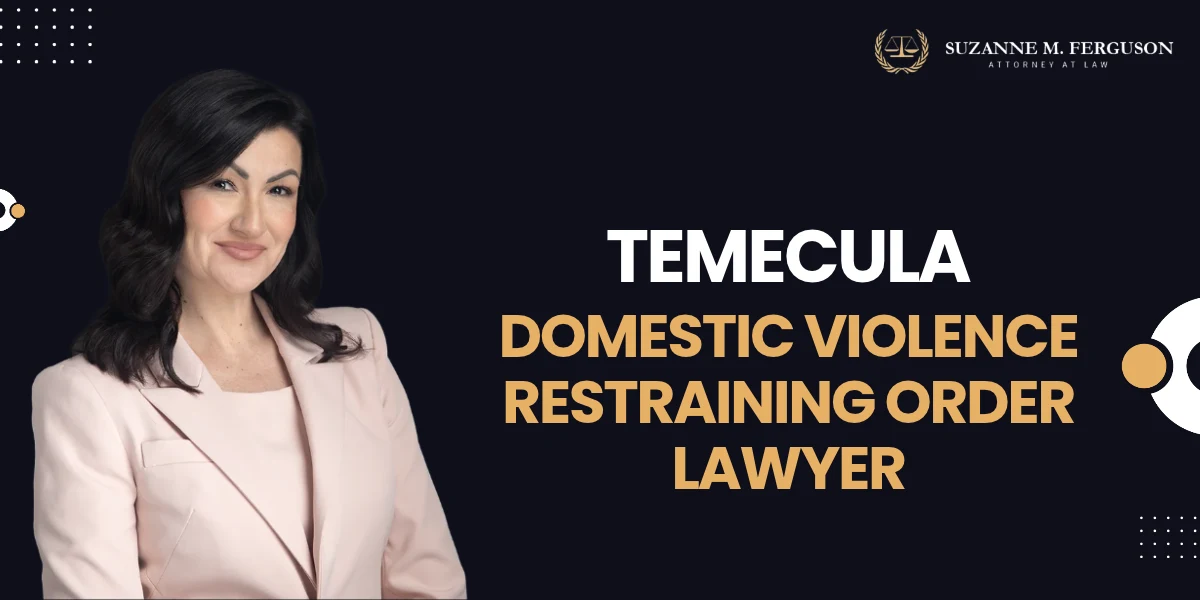
Domestic violence occurs between people who have a close relationship, like a couple, relatives, or roommates. If you’re experiencing physical violence or abuse at home, you have options to protect yourself and your loved ones. Restraining orders are designed to protect against further threats, stalking, and additional types of violence. It’s recommended that you discuss what steps to take with a qualified Temecula domestic violence restraining order lawyer.
Attorney Suzanne Ferguson has a longstanding commitment to assisting individuals through difficult situations, having volunteered at a domestic violence shelter while starting law school and helping prepare restraining order declarations.
With over 15 years of legal experience, Atty. Ferguson is deeply familiar with California law and understands how to navigate complex issues effectively. She is confident that she can bring experienced, strategic, and personalized representation to each of her clients.
In 2025, there were 6,984 domestic violence-related calls for assistance in Riverside County, 2,642 of which involved a weapon. Across California, there were 157,416 calls involving domestic violence that year.
In the state of California, domestic violence is legally defined as someone you are related to or knew intimately having committed at least one of the following actions:
It is considered domestic violence if the misconduct is from the victim’s boyfriend or girlfriend, former or current spouse, someone with whom they share a child, someone they currently live with or lived with in the past, or someone they are related to by marriage or blood.
If you have experienced mistreatment at home, you should hire a domestic violence restraining order lawyer as soon as possible to fully understand your legal options.
A domestic violence restraining order (DVRO) is a civil court order that can protect the petitioner and other household members, including children. When first issued, a DVRO is not automatically permanent, but steps can be taken to extend the order or make it permanent. Terms that can be outlined within a domestic violence restraining order include:

The specific legal venue that may oversee a restraining order case depends on where the petitioner lives and whether it involves civil harassment, workplace violence, or domestic violence. Domestic violence restraining order cases in the Temecula area are generally handled by the Riverside County Superior Court system, specifically the Southwest Justice Center. This courthouse is located at 30755-D Auld Road, Murrieta, CA 92563.
Be sure to confirm any addresses or other important information with your attorney, as details can vary.
The cost of hiring a domestic violence restraining order lawyer in the state of California can vary depending on the case’s complexity level and whether other family law issues, such as divorce or child custody, are involved. You may ask your DVRO lawyer about potential costs to understand their rates and how much your particular case may cost depending on the anticipated timeline.
In California, there are various types of restraining orders besides domestic violence orders, such as civil harassment, gun violence, workplace violence, elder abuse, school violence, and retail crime restraining orders.
It’s important to understand the distinction between domestic violence, civil harassment, and other types of restraining orders so you can seek the one appropriate for your situation. Domestic violence protective orders protect the petitioner from someone they currently or formerly lived with, share a child with, or are related to.
In California, there are various forms of evidence that can be helpful in supporting a domestic violence restraining order petition. The standard of proof is a preponderance of the evidence, meaning that the evidence points to the occurrence of domestic violence being more likely than not. Various types of evidence can be used, such as physical evidence of injuries and damaged property, threatening messages, and verbal and written statements.
In the state of California, it may take as little as one day to receive a temporary domestic violence restraining order, up to a few weeks to secure a full court hearing. While it is possible to receive immediate temporary relief and eventually a long-term DVRO, resolving the entire case may take multiple months. This includes settling matters of child custody or property division.
Yes, it is possible to change or end a domestic violence restraining order in California, although it is never guaranteed. The protected individual or the restrained individual can submit the request to the court, and a hearing is then scheduled. During the hearing, the safety of the protected person or parties is evaluated to determine whether a modification is appropriate.
Suzanne M. Ferguson, Attorney at Law, is incredibly adept at overseeing restraining order cases, including gathering supporting evidence, cross-examining, and implementing courtroom strategy within hearings. Don’t hesitate to reach out to our highly accessible and responsive team to schedule a consultation with Atty. Ferguson today. We are ready to listen to your experience, answer any questions you may have, and guide you towards the first step.



We don’t escalate. We respond.
Fields Marked With An “*” Are Required
"*" indicates required fields

27475 Ynez Road, Ste 283
Temecula, CA 92591
Get Directions
Call Us 949-887-7036
Copyright © 2026 Suzanne M. Ferguson, Attorney at Law• All Rights Reserved. Disclaimer | Site Map | Privacy Policy. Digital Marketing By: 
*Images are obtained under license from Canva and other third-party stock image providers, with attribution included where required.
